Ready to Sail Smart? How Provisioning and Storage for Weeklong Trips Turns Your Bourgogne Houseboat Holiday from Chaotic to Charming
Attention: you’re heading out on a weeklong houseboat trip in Bourgogne and want to eat well without drowning in soggy bread, smelly bins, or a fridge full of mystery leftovers. Interest: imagine crisp croissants on the bank at sunrise, a picnic under plane trees, and dinners that actually feel special — not compromises. Desire: with the right system for Provisioning and Storage for Weeklong Trips, you’ll spend less time fussing and more time sipping local wine and watching the light on the canal. Action: read on, follow the checklist, and you’ll be ready to provision like a pro.
Planning Weeklong Provisions with Bourgogne Marine: A Practical Guide
Good planning starts with honest questions. How many people are you cooking for? Any food allergies? Will you moor in towns daily or anchor in quiet stretches? The answers shape everything: how much fridge space you need, which markets to hit, and whether frozen proteins make sense.
As you plan your route and provisioning strategy, it’s smart to refresh practical seamanship and onboard living basics — for example, practicing Docking, Mooring, and Tie-up Techniques helps ensure your boat stays secure while you shop or relax; consulting a broader guide on On-Board Living and Boating Essentials will clarify galley limits, power constraints, and safety protocols; and reviewing local advice about Water Management and Waste Solutions prepares you to handle drinking water, graywater, and refuse responsibly during the week. Taking these steps early saves time and stress later.
Start with a realistic meal plan
Make a simple meal matrix: breakfasts, lunches, dinners, and snacks for each day. You don’t need Michelin-level detail — just enough to estimate quantities and identify perishables. Mark meals you plan to eat ashore; those days let you buy fewer fresh items.
Inventory the galley
Not all boats are created equal. Note whether your kitchen has an oven, grill, full-size fridge, or a small chiller. List essential cookware, storage containers, and utensils. That list will shape the recipes you choose — no point planning a roast if the oven is a rumor.
Map supply points along your route
Use a simple map or app to mark supermarkets, weekly markets, bakeries, and marina facilities. In Bourgogne, many charming towns run reliable markets on set days. Plan to buy long-lasting items at the start of the week and restock perishables midweek.
Make contingency plans
Power failures happen, fridges break, and shops close on holidays. Pack three days’ worth of non-perishable, ready-to-eat rations per person, a basic fuel stove if allowed by your rental, and water purification tablets. A bit of redundancy pays dividends in calmness.
Essential Food and Beverage Inventory for a Week on a Houseboat
Below is a practical, per-person baseline for a 7-day trip. You’ll want to scale up or down based on appetite, the number of meals ashore, and whether you’re feeding kids or big eaters.
| Category | Suggested quantity / person / week | Notes |
|---|---|---|
| Fresh fruit & vegetables | 3–5 kg mixed | Buy salad greens midweek; root veg lasts longer |
| Bread & bakery | 2–4 loaves + crackers | Daily boulangerie stops are a treat in Bourgogne |
| Dairy & eggs | 1–2 L milk, 6–12 eggs, 200–400g cheese | Mix hard and soft cheeses |
| Proteins (fresh/frozen) | 1–2 kg per two people | Freeze before boarding to extend life |
| Non-perishables | 1–2 kg pasta/rice, 6–8 cans tomatoes | Great for quick, hearty meals |
| Beverages | 2–4 L water/day/person + preferred wine/beer | Refill plan reduces carried weight |
| Cooking basics & condiments | Oil, salt, pepper, mustard, herbs | Decant into small bottles to save space |
Emergency essentials
- 3 days of ready-to-eat rations per person (canned meals, energy bars).
- Water purification tablets and spare bottled water.
- Basic medical kit and any prescription meds stored safely.
- Portable gas stove or camping stove if the boat permits it.
Smart Storage Solutions: Maximizing Small Kitchen Spaces Aboard
Small galleys test your organizational skills. But with a few clever moves, you can create a kitchen where everything has a place and nothing slides into a black hole.
Packaging hacks that save space and time
Vacuum-seal loose items, portion proteins and meals into single-serve bags, and decant bulky bottles into smaller containers. Pre-portioning not only saves space but also reduces decision fatigue when you’re ready to eat.
Fridge and freezer strategies
Keep a fridge thermometer, and always group items by temperature and use frequency. Pre-freeze water bottles to act as ice blocks — they’re safe, cheaper than gel packs, and you’ll have extra drinking water as they thaw.
Storage gear that actually helps
- Stackable, airtight containers — clear ones if possible.
- Non-slip liners for shelves and drawers.
- Bungee cords or Velcro straps to secure heavier items while underway.
- Nesting cookware and collapsible bowls to cut down bulk.
Organize by meal, not ingredient
Store ingredients grouped by planned meal (breakfast box, picnic box, dinner box) rather than random cans on different shelves. When you want to make lunch, you grab the “lunch box” and you’re done. Fast, tidy, and it limits food exposure to ambient heat.
Shopping in Bourgogne: Local Markets, Suppliers, and Route Planning
Bourgogne is a food lover’s heaven. The markets are part of the trip. But a little planning ensures you nab the best produce and aren’t left trading crackers for dinner.
Timing is everything
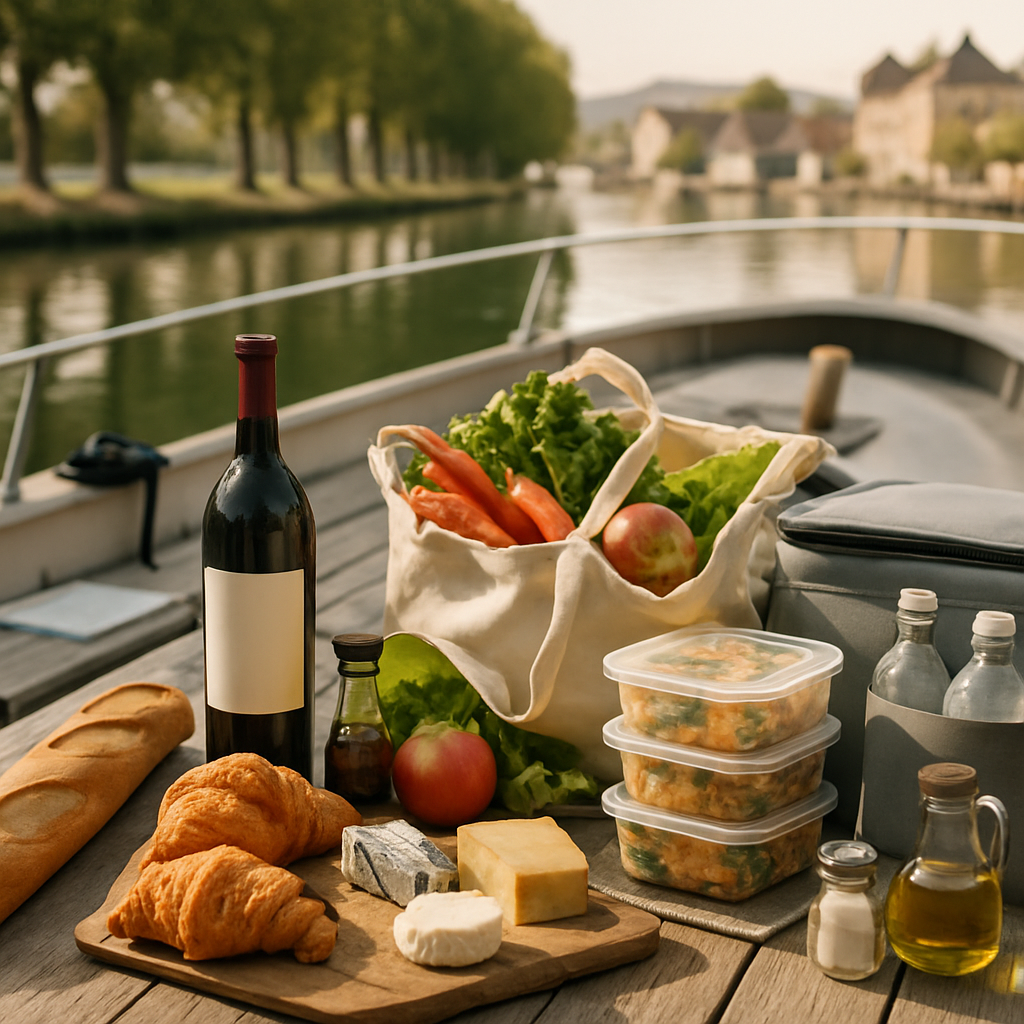
Markets in towns like Beaune, Dijon, and Chalon-sur-Saône run on predictable days. If you time your route to coincide with market days, you’ll get fresher produce, excellent cheese, and artisan charcuterie. Pro tip: arrive early to avoid the crowds and find the best picks.
What to buy where
- Boulangerie: daily fresh bread and pastries — plan morning pick-ups.
- Fromagerie and charcutier: local cheeses and cured meats — choose some hard cheeses for longer life onboard.
- Supermarkets in larger towns: bulk staples, bottled water, and any specialty items you can’t find locally.
- Fishmonger or butcher: buy fresh proteins for near-term use, or get items frozen to preserve them.
Logistics and route planning
Create a short route sheet: town name — market day — nearest marina — supermarket hours. Keep it visible in the galley. That simple map will save you last-minute detours and help you plan midweek restocks effectively.
Pack Light, Stock Right: Balancing Fresh vs. Non-Perishables
The secret to smart provisioning is balance. Too many perishables and you’ll cook the same salad for days; too many cans and you’ll miss the joy of fresh flavors. Let the route and your meal plan guide the ratio.
Practical rules of thumb
- Buy perishables in smaller batches and restock midweek.
- Stock high-quality shelf-stables: olive oil, good canned tomatoes, dried pulses.
- Prioritize preserved local specialties — pickles, rillettes, and cured sausages — for authenticity and longevity.
- Pre-cook and vacuum-pack stews, casseroles, or sauces. They reheat quickly and free up fridge space.
Sample provisioning timeline
- Embark day: long-life staples, frozen proteins, and supplies for a few immediate meals.
- Days 1–3: consume frozen and shelf-stable meals; use fresh produce bought at the start.
- Midweek: stop in a larger town to restock greens, bread, dairy, or fresh fish/meat.
- Final days: switch to pantry-based dinners and plan an ashore celebration meal.
Safety, Waste, and Sustainability: Managing Provisions Responsibly
Part of being a considerate boater is protecting the waterways and handling food safely. The right habits keep you healthy and ensure canals and marinas remain beautiful.
Food safety basics on the water
- Keep the fridge at 4°C/40°F or below — check it daily with a thermometer.
- Store raw meat and fish on the lowest shelf, sealed to prevent drips.
- Use insulated bags for market runs and transfer items quickly to the fridge.
- When in doubt, toss it — foodborne illness will ruin a holiday faster than rain.
Waste management and minimal impact
Separate recyclables, compostables, and landfill waste. If marinas offer compost or food-waste disposal, use them. Otherwise, keep food scraps in sealed bags and dispose ashore. Avoid dumping anything overboard — not only is it illegal in many places, it harms wildlife.
Sustainable provisioning practices
- Support local producers — less transport, more flavor.
- Bring reusable containers and cloth bags for markets.
- Plan meals to use leftovers creatively — frittatas, soups, and salads are great for this.
- Choose sustainably sourced fish and local, seasonal produce.
Practical Tools: Checklists, Apps, and Quick Tips
Organize your provisioning with simple tools so everyone on board knows what’s available and what’s needed.
Low-tech wins
- Whiteboard or magnetic checklist in the galley that tracks inventory and meal plan.
- Masking tape and marker for date-labeling containers.
- Pre-packed meal boxes to speed up prep and preserve order.
Useful apps and digital aids
- Pantry/inventory apps to track quantities and expiry dates.
- Navigation apps for mapping markets and nearest marinas.
- Weather apps — wind and rain can change plans, and fresh-market trips are best on calm mornings.
Sample Weekly Meal Plan — Flexible and Boat-Friendly
Here’s a sample plan to give you ideas. It focuses on overlapping ingredients and minimal fuss, so you spend time enjoying Bourgogne, not slaving over the stove.
Day-by-day snapshot
- Day 1: Breakfast — yogurt, granola, fruit. Lunch — charcuterie, baguette, salad. Dinner — one-pot pasta with canned tomatoes and herbs.
- Day 2: Breakfast — eggs and toast. Lunch — sandwiches. Dinner — grilled fish (fresh) or tuna Niçoise with canned tuna.
- Day 3: Breakfast — croissants from bakery. Lunch — picnic on shore. Dinner — bean and sausage stew that reheats well.
- Day 4: Breakfast — porridge with dried fruit. Lunch — market baguette sandwiches. Dinner — stir-fry with rice and vegetables.
- Day 5: Breakfast — eggs and roasted tomatoes. Lunch — salad with leftover proteins. Dinner — pre-cooked roasted chicken or vacuum-packed meal.
- Day 6: Breakfast — cheese and bread. Lunch — simple soups or leftovers. Dinner — risotto or paella made with pantry staples.
- Day 7: Breakfast — brunch omelette with leftovers. Lunch — eat ashore or light picnic. Dinner — celebration meal with local wines and a fresh local catch.
Frequently Asked Questions — Provisioning and Storage for Weeklong Trips
How much water should I carry for a weeklong houseboat trip?
You should plan for 2–4 liters of drinking water per person per day, plus a modest reserve for cooking and basic hygiene. That means roughly 14–28 liters per person for a week, though you can cut the bulk if you plan regular marina refills. Carry a few large refillable jugs and know where the marina potable water points are. If you’re unsure of a source, keep purification tablets or a compact filter on board as backup.
How do I keep perishables fresh on a moving boat?
Start by pre-freezing proteins and using frozen water bottles as ice blocks in your fridge or coolers. Keep the fridge at or below 4°C (40°F) and use a thermometer to check it daily. Store raw meat and fish in sealed containers on the lowest shelf to prevent drips. Buy delicate items like salad leaves and berries in smaller midweek batches so they’re eaten quickly. Vacuum-seal or airtight-pack meals to reduce exposure to air and accelerate cooling.
What should I buy in Bourgogne markets versus supermarkets?
Use markets for fresh, regional treats: bread from the boulangerie, cheeses from the fromagerie, seasonal vegetables, and charcuterie. These items bring local flavor and are often superior in taste. Stock up on staples, bulk dry goods, bottled water, and any specialized supplies at supermarkets in larger towns where you might also find better opening hours. Plan market visits on their scheduled days to get the best produce and artisan goods.
How much food should I provision per person for a week?
A simple baseline is 3–5 kg of mixed fresh produce per person, 1–2 liters of milk, 6–12 eggs, 1–2 kg of staples like pasta or rice, and roughly 1–2 kg of proteins per two people (frozen or fresh). Adjust up for big eaters or if you’ll cook every meal onboard. If dining ashore often, scale back on perishables accordingly. Always factor in snacks and beverages — they disappear fast when you’re boating.
What if the fridge stops working mid-trip?
Have a contingency plan: move perishables into coolers with frozen bottles, prioritize eating the most vulnerable foods first, and switch to canned or dry meals while you source repairs or reach a town with ice. If you can safely source dry ice or extra ice at a marina, use it temporarily. Keep a small stock of ready-to-eat, non-perishable rations for at least three days per person so you’re never stranded without food.
How do I handle dietary restrictions and allergies onboard?
Plan meals with clear labels and separate storage for allergen-free food. Keep common allergens aside and avoid cross-contamination by using separate cutting boards and utensils for restricted diets. When shopping, buy pre-packaged items with ingredient lists if someone has severe allergies. Communicate with your crew about meal roles so everyone knows what’s safe to eat and who’s preparing which dishes.
How can I reduce food waste while on a houseboat?
Plan meals that reuse ingredients — make a roast one night, then use leftovers in sandwiches, salads, or fried rice. Buy perishables in smaller batches and restock midweek. Use airtight containers to prolong freshness and freeze bread or proteins you won’t use immediately. If possible, compost food scraps or store them in sealed biodegradable bags for disposal ashore. Reusable containers and thoughtful portioning are your best allies against waste.
Are there restrictions on cooking fuels or open flames aboard rental boats?
Rules vary by boat owner and marina. Many rentals allow use of the onboard gas hob but prohibit open flames on outdoor decks. Portable camping stoves are sometimes allowed with prior permission and strict storage rules for spare fuel. Always check your rental agreement and safety briefing, and carry approved fuel containers stored according to regulations. Safety comes first: never leave cooking unattended and keep a working fire extinguisher nearby.
How should I dispose of graywater and food waste responsibly?
Never dump food waste or oily graywater into the canal. Use marina-provided disposal points for rubbish and recycling, and empty wastewater tanks at designated pump-out stations. Keep food scraps in sealed bags or containers and dispose ashore where facilities exist. Following local water management guidelines protects the waterways and keeps marinas pleasant for everyone.
What are the best tools to keep provisioning organized onboard?
Keep a visible meal plan and inventory list on a whiteboard in the galley, use airtight, stackable containers with date labels, and maintain a simple pantry app or checklist to track quantities and expiry dates. Collapsible bowls, nesting cookware, and non-slip liners make living easier. These low-tech and digital tools reduce stress, prevent overbuying, and keep your galley running smoothly throughout the week.
Final Checklist Before You Cast Off
- Confirm galley appliances, gas, and power sources are working.
- Pack non-perishables first and freeze proteins if needed.
- Write and display a meal plan and inventory list in the galley.
- Map market days and marina waste points along your route in Bourgogne.
- Secure storage with bungees and non-slip liners; label containers with dates.
- Load emergency water, rations, and medical supplies.
Provisioning and Storage for Weeklong Trips is half art, half logistics. With the right mix of planning, local shopping, smart storage, and sustainable habits, you’ll spend less time worrying and more time enjoying the canals, vineyards, and riverside cafés of Bourgogne. Sail prepared, stay flexible, and bon voyage — you’re ready to taste the region, one meal at a time.