Imagine cruising the quiet, tree-lined canals of Bourgogne, wine country rolling by, birds calling—and then, out of the blue, an alarm sounds. You don’t want panic; you want a plan. This guide gives you clear, practical, and human-friendly Emergency Procedures and Evacuation Plans tailored for houseboats on the Bourgogne waterways. Read it, practice it, and you’ll enjoy the canals with more confidence and far fewer “what ifs.”
Emergency Procedures on a Houseboat: Quick Response Guide for Bourgogne Canals
Emergencies on a houseboat are unusual but possible. The key is to react quickly, calmly, and in the right order. When something bad starts, it helps to remember three priorities: protect life, contain the hazard, and get help. Here’s a quick response checklist that you and everyone on board should know by heart.
Before you set sail, it’s wise to compare your kit to a proven list so nothing essential is overlooked. For a thorough rundown of items you should always have on board, consult the Safety Gear Checklist for Houseboats, which walks you through lifejackets, flotation devices, emergency lighting, first-aid supplies, and fire-fighting gear—everything that helps turn a scary moment into a manageable one.
Rules and local practices matter when you’re navigating inland waterways. If you want a broader picture of regulations and sensible behaviour on the canals, take a look at our guide to Safety, Regulations, and Boating Tips. It covers important topics like speed limits, lock etiquette, mooring rules, and how to coordinate with canal staff, all of which reduce the chance of mishaps that might otherwise trigger an evacuation.
The weather in Bourgogne can shift faster than you think, especially in shoulder seasons—afternoons may be calm then an evening squall arrives. For route planning and storm readiness, check the practical advice in Weather Forecasting and Storm Preparedness, which explains how to read local forecasts, recognise severe-weather signs, and prepare your vessel for sudden winds or heavy rain.
Immediate actions (what to do in the first minute)
- Shout a clear warning: Use plain language—“Fire in the galley!” or “Man overboard starboard!”—and point if appropriate. Clear words save time.
- Move people away: Lead everyone to the nearest safe area on board, ideally a pre-determined muster point. Don’t let people wander trying to collect belongings.
- Isolate power sources: If you can do so safely, turn off gas valves and electrical breakers that feed the affected area. Stop engines if they worsen the situation.
- Contain what you can: Close hatches, vents, and doors to slow the spread of smoke or water. Use blankets or covers for small, contained fires.
- Call for help: Use your VHF or phone to contact emergency services and nearby boats. Give your exact location (lock name, kilometer marker, nearest landmark), the nature of the emergency, and the number of people aboard.
- Evacuate if necessary: Put on lifejackets and head to the muster point or shore. Never delay evacuation to save valuables.
- Accountability: Perform a headcount once you are safe. Keep a log of who was on board and what actions were taken.
Evacuation Plans for Houseboats on Bourgogne Canals: A Step-by-Step Readiness Checklist
A clear evacuation plan reduces confusion and speeds up rescue. The plan should be simple, rehearsed, and adapted to your vessel and route. Below is a step-by-step checklist to build a robust plan before you cast off.
Prepare the plan
- Write it down: A short, clear written plan ought to be posted near the main entrance and in the galley. It should show primary and secondary escape routes and the location of emergency equipment.
- Update the passenger manifest: Include names, ages, medical conditions, emergency contacts, and swimming ability.
- Identify muster points: Choose a primary and secondary muster point on the boat and at designated shore locations along your route.
Equip the boat
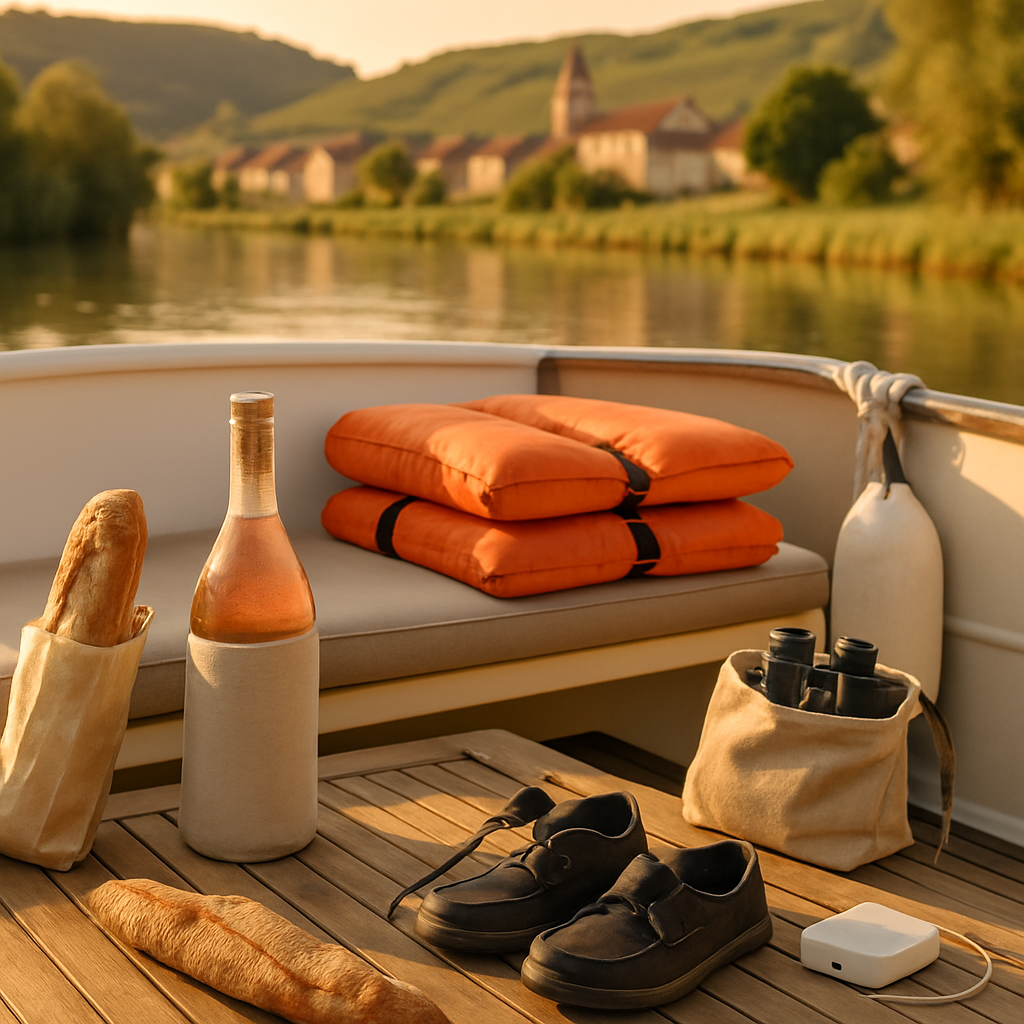
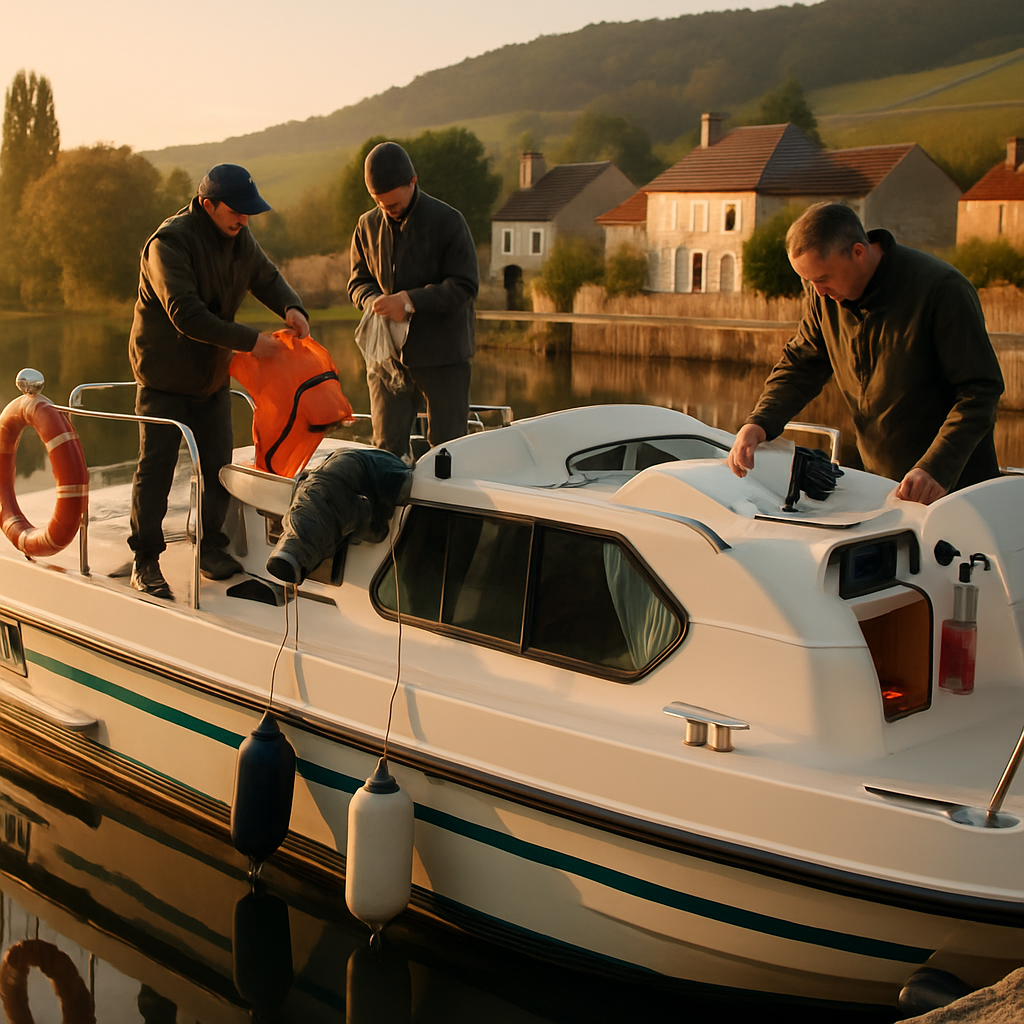
- Lifejackets: one for each person, stored where they can be grabbed quickly.
- Throwable flotation: lifebuoy or rescue cushion with line.
- Fire extinguishers: correctly rated and placed in galley, engine space, and living areas.
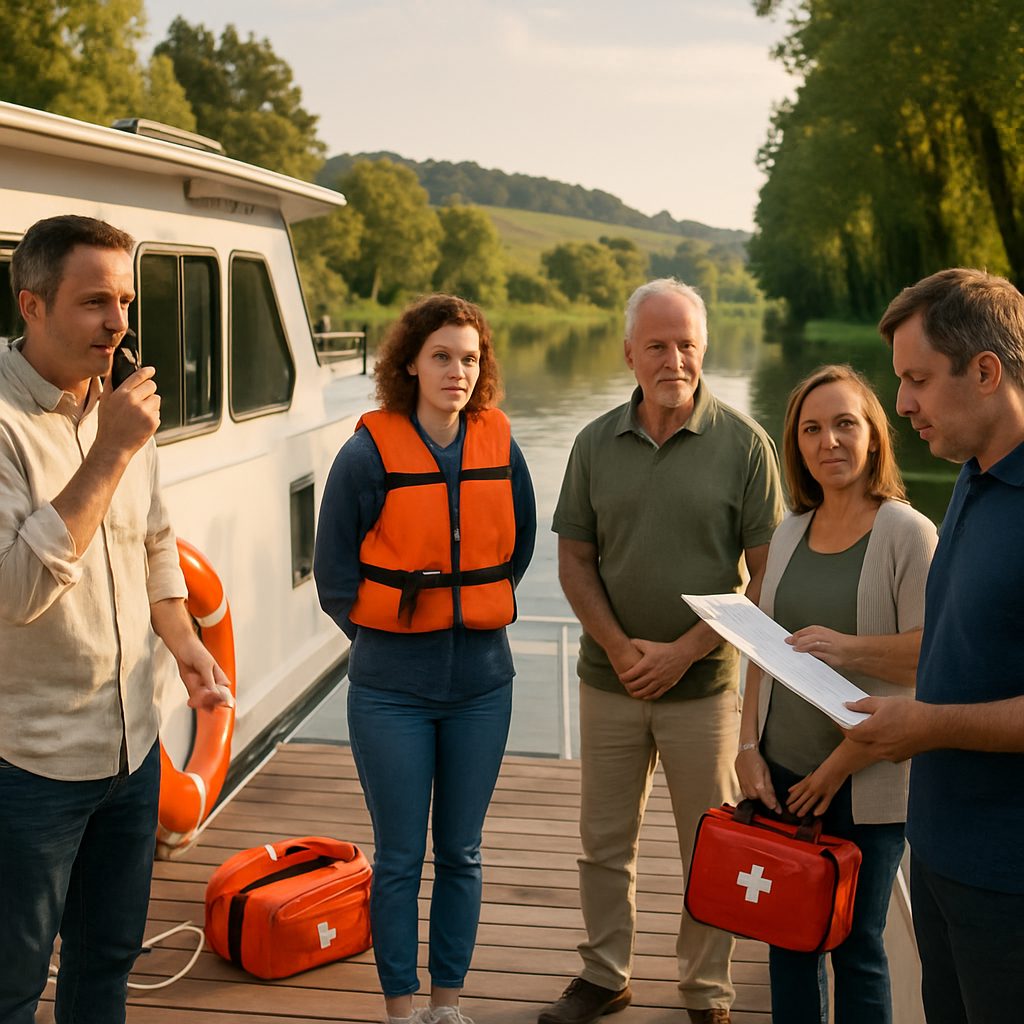
- First-aid kit: include trauma supplies, and upskill at least two people in basic first aid and CPR.
- Emergency lighting and spare batteries, a VHF radio, and a spare phone battery or power bank.
- Emergency-go bag: include a list of passengers, copies of IDs, a torch, whistle, high-visibility poncho, basic meds, and a small tool kit.
Assign roles and rehearse
- Captain: overall authority and final decision-making.
- Evacuation leader: leads people to muster points and coordinates movement.
- Communications lead: manages radio and phone calls to services and shore contacts.
- First-aid lead: assesses injuries and provides immediate care.
- Accountability lead: calls roll and maintains the manifest.
Practice makes perfect
Run at least one short drill every week or before a longer trip. Drills should include fire response, abandon-ship, and man-overboard procedures. Don’t make them theatrical—just realistic enough that everyone remembers what to do when nerves are higher for real.
Muster Points and Accountability: Where to Gather During an Onboard Evacuation
Muster points are the “where” of your evacuation plan. Choose them wisely and make sure everyone on board knows them before you leave the dock.
Choosing your muster points
- Primary muster point: A central deck area clear of engine and galley hazards, with lifejackets and emergency items within arm’s reach.
- Secondary muster point: An upper deck or stern area that is safe if smoke or fire blocks the primary point.
- Shore muster point: For each leg of your route, choose a safe, obvious spot on the bank—a lock-side bench, a marked parking area, or the marina office. Tell passengers where this is at embarkation.
How to account for everyone
- The accountability lead reads names from the manifest and checks off each person as they arrive at the muster point.
- If someone is missing, the captain immediately decides whether to attempt a targeted search or call rescue services—don’t waste time arguing.
- Assign one person to keep a running written log: who arrived, when, and any first-aid given.
- People stay at the muster point until rescue or transfer is arranged. No lone trips—rescues are safer when the team stays together.
Fire Safety and Alarm Protocols Afloat: Prevention, Detection, and Response
Fire is one of the scariest scenarios on any boat. It spreads fast and creates smoke that disorients. Prevention and early detection are your best defenses.
Prevention tips
- Check gas lines and fittings before each departure. Replace bits that look tired or corroded.
- Keep a tidy galley: no grease build-up, no clutter near the cooker, and never leave pots unattended when cooking.
- Be strict about smoking: only in designated outdoor areas with safe disposal.
- Store spare fuel and solvents in locked, ventilated compartments away from living spaces.
- Regularly inspect batteries and charging systems for overheating or corrosion.
Detection and alarms
Install smoke detectors in sleeping areas and near the galley. Carbon monoxide detectors should be used where petrol or gas engines are present. Test alarms monthly and keep spare batteries on board—don’t rely on the hope that the alarm will somehow work when you need it most.
Immediate response to a fire
- Sound the alarm and give the location loudly to everyone.
- If trained and the fire is small, use the appropriate extinguisher. Remember: don’t fight big fires—evacuate.
- Close vents and hatches to limit oxygen flow.
- Put on lifejackets and head to the muster point; prepare to abandon ship if commanded by the captain.
- Call emergency services with clear details: your name, vessel, position, type of fire, and number of people aboard.
Man Overboard Procedures on Bourgogne Waterways: Immediate Actions and Retrieval
A man-overboard (MOB) event is time-critical: seconds matter. On canals like those in Bourgogne, speeds are low and drift is limited, but the confined environment can complicate retrieval. Move fast, stay calm, and follow practiced steps.
First actions (first 30–60 seconds)
- Shout “Man overboard!” and point continuously at the person to keep visual contact.
- Throw a buoyant aid with a line immediately—every second counts.
- Reduce propulsion: go to neutral and stop the engine to avoid propeller injuries.
- Drop a marker buoy if you have one, or note a fixed landmark so you can return to the correct spot.
Recovery techniques
- In narrow, slow canals, a controlled turn back (often an Anderson Turn) brings you to the victim while maintaining distance from the propeller.
- Approach from downwind or down-current if possible, then stop the engine at a safe distance before attempting to bring the person alongside.
- Use boarding ladders, slings, or a rescue scoop to help someone aboard—avoid lifting someone by the arms only if they may have injuries.
- If shore is nearby and shallow, towing the person to a gentle bank can be safer than bringing them on board.
After you recover the person
- Assess airway, breathing, and circulation. If breathing has stopped, begin CPR immediately if you are trained.
- Warm the person gently; remove wet clothing and wrap them in blankets to prevent hypothermia.
- Record timing: when they went overboard, when buoyant aids were thrown, and when they were recovered. This information helps emergency responders.
Communications Protocols and Emergency Contacts for Bourgogne Marine Adventures
Communications are the lifeline during emergencies. A clear protocol makes calls faster and less confusing—exactly what you want when adrenaline is running high.
Before you leave the dock
- File a float plan with someone ashore: departure point, intended route, estimated arrival time, and a list of people on board.
- Check that all phones are charged, VHF is working, and you have spare batteries or a power bank. Keep radios in waterproof pouches.
- Program emergency numbers into phones and print a paper copy in a waterproof folder—technology can let you down when you least expect it.
How to make an emergency call
- If you have VHF, use Channel 16 for immediate distress. For life-threatening emergencies, use “Mayday.” For urgent but non-immediate problems, use “Pan-Pan.”
- If using a phone, call 112 for EU emergencies. Be ready to give your vessel name, exact position (lock name, nearest km mark), the nature of the emergency, and the number of persons on board.
- Stay on the line and follow instructions. Keep someone monitoring communications once you’ve called for help.
Essential contacts to keep handy
| Emergency Number (EU-wide) | 112 |
| Local Maritime/Rescue via VHF | VHF Channel 16 (or local channel provided by authorities) |
| Nearest Lock-Keeper or Marina | Have the numbers for the next two or three locks and marinas along your route |
| Bourgogne Marine Office | Keep your operator’s daytime and after-hours emergency line |
Training, Drills, and Documentation
Having the right gear is just the start. Regular training and proper documentation make the difference between a messy incident and a controlled response.
Drills and frequency
- Run short drills at embarkation and a full drill weekly on longer trips. Include fire, man-overboard, and full evacuation scenarios.
- Role-play how you’d respond when a key person is injured—this helps you avoid depending on one individual.
- Invite guests to observe and participate; it’s quicker and less embarrassing to learn in practice than during a real emergency.
Document everything
Keep a training log with dates, who participated, and what was practiced. After any incident or near miss, write a short report and update your plan. You’ll be surprised how much better the second time around becomes.
Frequently Asked Questions — Emergency Procedures and Evacuation Plans
Q: What are the absolute essentials I should have for emergencies on a houseboat?
You should always have properly fitting lifejackets for everyone, a throwable flotation device, at least one correctly rated fire extinguisher in the galley and engine areas, a well-stocked first-aid kit, working smoke and CO detectors, a VHF radio or reliable mobile phone with portable charger, and an emergency-go bag with important documents and basic supplies. For a full checklist you can compare your kit with the detailed Safety Gear Checklist for Houseboats.
Q: How often should you run emergency drills with your guests or crew?
You should brief passengers at embarkation and run a short drill each time new people come aboard. For ongoing trips, aim for at least one full drill per week that covers fire, abandon-ship, and man-overboard scenarios. Regular practice reduces confusion and builds confidence—so don’t skip it even if it feels repetitive.
Q: When should you evacuate to shore rather than stay aboard?
If the hull is breached, the fire is out of control, or toxic smoke makes the interior unsafe, evacuate to shore immediately if it’s a safe option. Stay aboard only when the vessel is stable, you have lifejackets and shelter, and rescue is on the way. The captain must weigh the risk quickly—if in doubt and shore is reachable without increased danger, head for land.
Q: What are the fastest steps to take for a man-overboard on narrow canals?
Shout “Man overboard!” while pointing, throw a float with a line immediately, put the engine in neutral and stop, mark the spot with a buoy or landmark, and perform a controlled turn back toward the person keeping the propeller stopped during final approach. Use ladders or slings for recovery and provide warmth and first aid once aboard.
Q: How do you make an effective emergency call on Bourgogne waterways?
If you have a VHF, use Channel 16 and issue a clear “Mayday” for life-threatening situations or “Pan-Pan” for urgent but non-life-threatening issues. If using a phone, call 112 and be ready to give your vessel name, precise position (lock name or km mark), the type of emergency, and number of people aboard. Keep someone listening on the radio until help arrives.
Q: Are lifejackets legally required on Bourgogne canals and which type should you use?
Local rules can vary, but you should treat lifejackets as mandatory: have one for every person and ensure they’re the correct size and in good condition. For canal cruising, look for comfortable, buoyant jackets that allow movement—inflatable types are fine if properly maintained, but for non-swimmers or children, a foam jacket offers guaranteed buoyancy.
Q: How should you prepare for sudden bad weather while cruising Bourgogne?
Before departure, check updated forecasts and watch for rising winds or thunderstorms during the day. Secure loose items, close hatches, lower awnings, and have a plan to seek shelter in a marina or behind a lee shore. For detailed guidance on forecasts and storm prep, review Weather Forecasting and Storm Preparedness.
Q: What documentation should you keep in your emergency-go bag?
Keep copies of IDs, the vessel’s registration, insurance details, the passenger manifest, contact numbers for your operator and local marinas, a waterproof map of your route, and a paper float plan. Also include a headlamp, whistle, spare batteries, basic medications, and a phone power bank so you’ve got essentials if electronics fail.
Q: Who should you contact first if something goes wrong on the canals—marina staff, lock-keepers, or emergency services?
For immediate life-threatening events, call emergency services (112) or use VHF Channel 16. For non-life-threatening issues like minor mechanical failure, contact the nearest lock-keeper or marina—they often have local knowledge and can provide fast, practical help. Your operator or Bourgogne Marine office should also be informed so they can coordinate or support you.
Final Checklist — Before You Cast Off
- Lifejackets inspected and placed at hand.
- Fire extinguishers charged and easy to reach.
- Passenger manifest completed and briefed at embarkation.
- Float plan filed with a shore contact and route details left at the marina office.
- Communications checked and emergency numbers programmed into devices and on paper.
- Emergency-go bag assembled and stored at the primary muster point.
- Everyone on board knows the muster points and can reach lifejackets in under 60 seconds.
Wrapping Up: Keep It Simple, Keep It Practiced
Emergency Procedures and Evacuation Plans don’t need to be complicated to be effective. The trick is simplicity and repetition. Make your plan clear, practice it often, and check your equipment regularly. When the unexpected happens, you won’t be inventing solutions—you’ll be following muscle memory. That’s the difference between a frightening story and one you can later laugh about over a glass of local Bourgogne wine.
If you’d like a printable quick-reference checklist tailored to your specific houseboat model and route, let your Bourgogne Marine host know before you set off. They’re used to helping visitors relax—and to helping them stay safe when the water decides to be dramatic. Safe travels, and enjoy the canals!