Don’t Set Sail Without This: A Safety Gear Checklist for Houseboats That Actually Keeps You Safe (and Lets You Relax)
Attention: you’re planning a dreamy houseboat trip through Bourgogne’s peaceful canals and warm summer afternoons. It sounds perfect — and it can be, as long as you bring the right gear. Interest: this Safety Gear Checklist for Houseboats walks you through the must-haves, the nice-to-haves, and the “thank-goodness-we-had-this” items so you and your crew can enjoy the trip without worrying about what could go wrong. Desire: imagine cruising, laughing, and locking through canal gates confident that your boat is prepared. Action: read on, pack smart, and run a quick drill before you leave the quay.
Safety Gear Checklist for Houseboats: Essentials You Should Never Leave Aboard
Before you pack, take a few minutes to consult helpful, practical guidance that ties safety equipment to real-world procedures and local rules. Review our detailed Emergency Procedures and Evacuation Plans to design a straightforward onboard response and escape plan suited to your layout. Check the latest France and European Waterway Regulations so your gear and practices comply with legal requirements. Finally, browse the central hub for additional resources at Safety, Regulations, and Boating Tips for printable checklists and seasonal advice to refine your Safety Gear Checklist for Houseboats.
First things first: whether you’re on a compact barge or a roomy floating cottage, there are items you should never ignore. This section lays out the essential equipment for every departure — and why each item matters. Keep this checklist handy and make it part of your pre-departure routine.
- Personal Flotation Devices (PFDs) — one per person, correct sizes, readily accessible.
- Throwable flotation — life ring or buoyant cushion for quick recovery.
- Marine VHF radio — fixed or handheld, with charged backup batteries.
- Visual and audible distress signals — handheld flares (where legal), signal mirror, whistle or horn.
- First aid kit — stocked for common boating injuries and tailored to your party.
- Fire extinguishers — marine-rated, in service, and placed near the galley and engine.
- Smoke and carbon monoxide detectors — fresh batteries and regular tests.
- Bilge pumps — automatic with manual backup; test them often.
- Anchor and lines — suitable for riverbed type and spare line for emergencies.
- Navigation lights — functional and with spares for bulbs and fuses.
- Tool kit and spare parts — impellers, filters, fuses, spare prop tools.
- Emergency plan — printed contact list and digital copy on a waterproof device.
Make these essentials your baseline. They are the foundation of every Safety Gear Checklist for Houseboats and will prevent many common mishaps from turning into real emergencies.
Personal Flotation Devices and Injury Prevention: A Houseboat Safety Guide
Life jackets save lives, but not all PFDs are created equal. This section covers how to choose, fit and use PFDs and other practical ways to prevent injuries while onboard.
Choosing the right PFD
There’s a world of PFD types: inflatable waist belts, classic foam jackets, and high-buoyancy vests. For houseboating, opt for comfortable foam or hybrid jackets that people will actually keep on — especially when moving on deck, during night passages, or when the weather turns. For children, get US Coast Guard or CE-approved models with crotch straps and head support when available.
Fit and maintenance
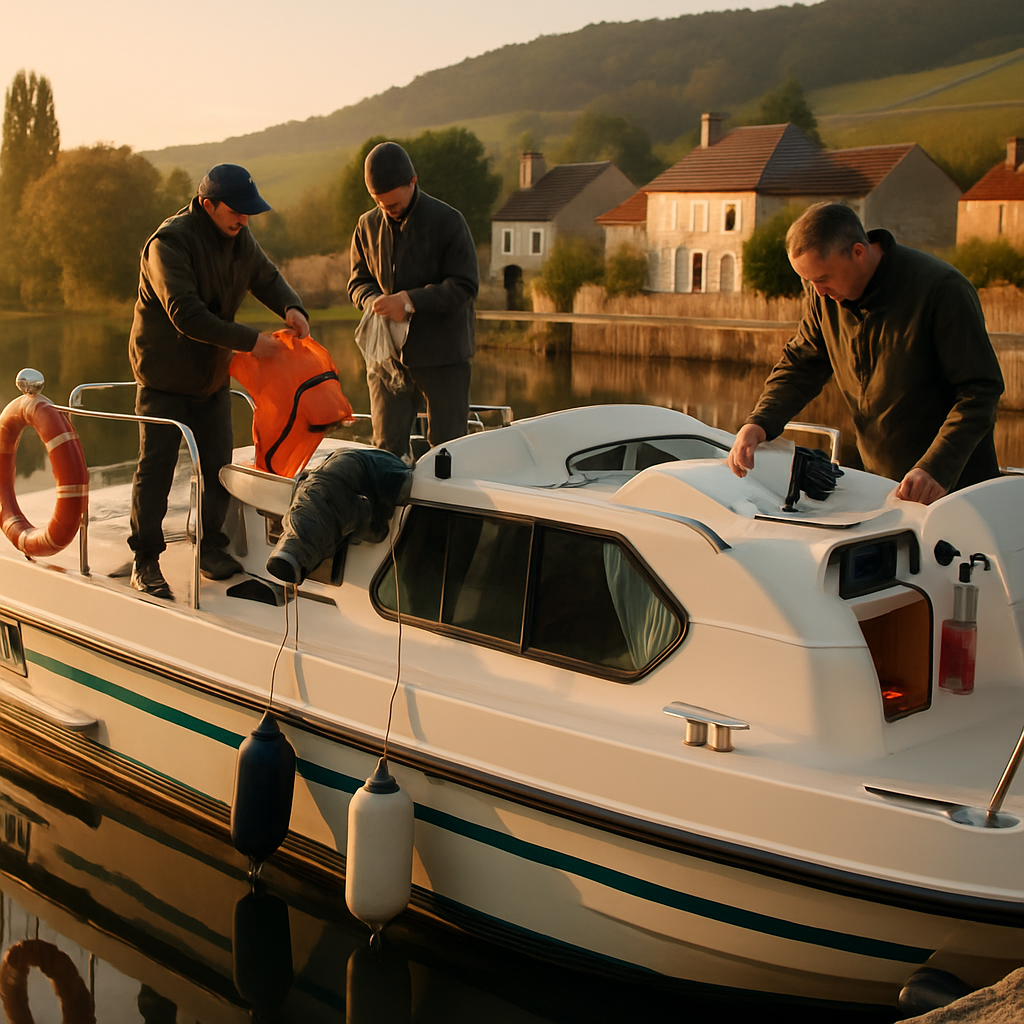
Fit matters. Have everyone try their PFD on the boat with normal clothing. If a vest slips over the chin when you pull up on the shoulder straps, it’s too big. Inspect straps, buckles, and fabric regularly. If any component shows cracking, UV damage, or compromised foam, replace it. Store vests dry, out of direct sunlight, and rinse them after exposure to contaminants.
Beyond life jackets — preventing slips and strains
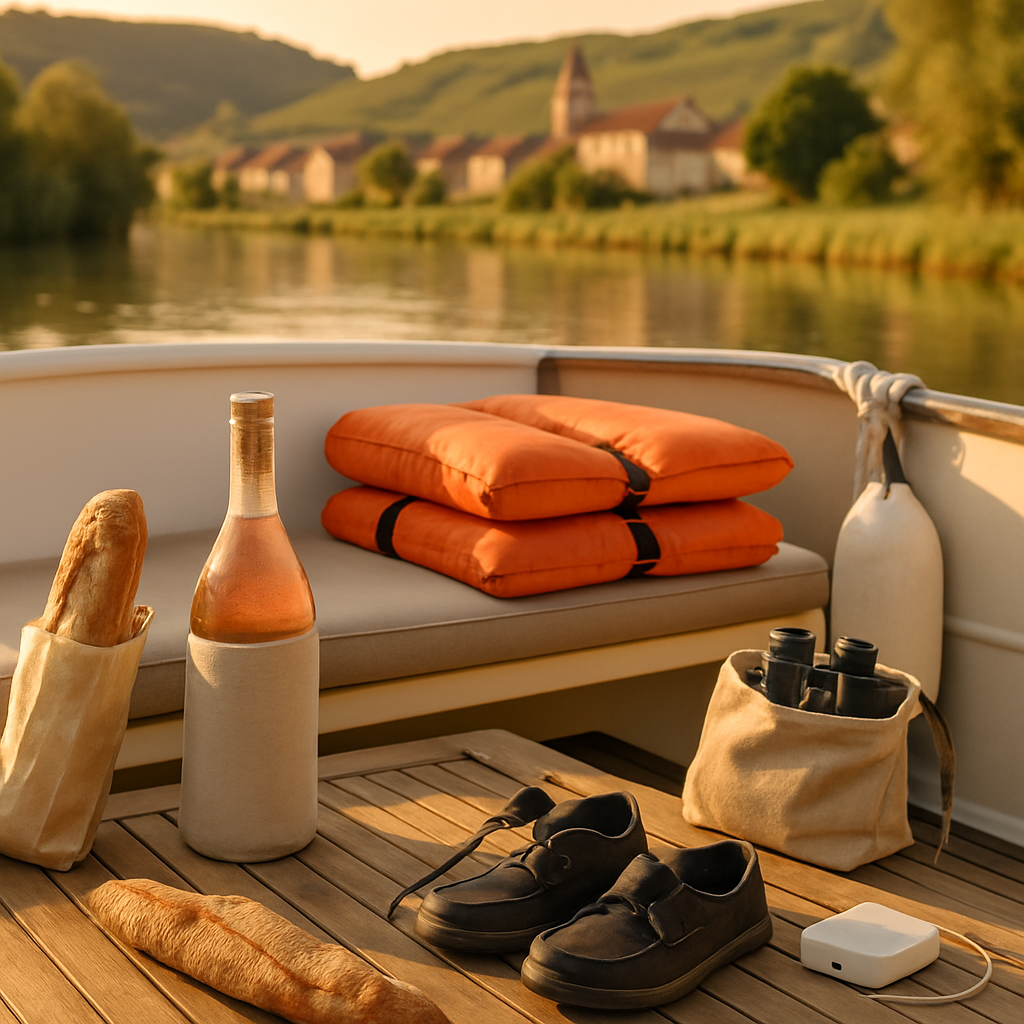
Prevention goes beyond flotation. Install good non-slip deck coverings, keep walkways clear, and encourage proper footwear — deck shoes with grippy soles are worth their weight in calm. Teach simple rules: one hand for the boat, keep lines coiled and stowed, and ask for help lifting or moving heavy items. These small habits cut down on sprains, bruises, and boarding mishaps.
Communication, Navigation, and Weather Tools: Safety Gear for Smooth Bourgogne Journeys
Good communication and solid situational awareness are your best defense when things start to go sideways. The Bourgogne waterways are charmingly rural; sometimes that means limited mobile reception and locks that operate on local hours. Bring redundancies.
Communication essentials
- VHF Radio: This is your primary marine communication tool. Learn the distress procedures and the local channel etiquette.
- Handheld VHF: A portable backup for when you’re away from the helm or if the fixed set fails.
- Mobile phone in a waterproof case: Keep local emergency numbers and a route plan saved offline.
- Personal Locator Beacon (PLB) or EPIRB: Especially useful if you’re planning long stretches away from immediate assistance or cruising at night.
Navigation and situational awareness
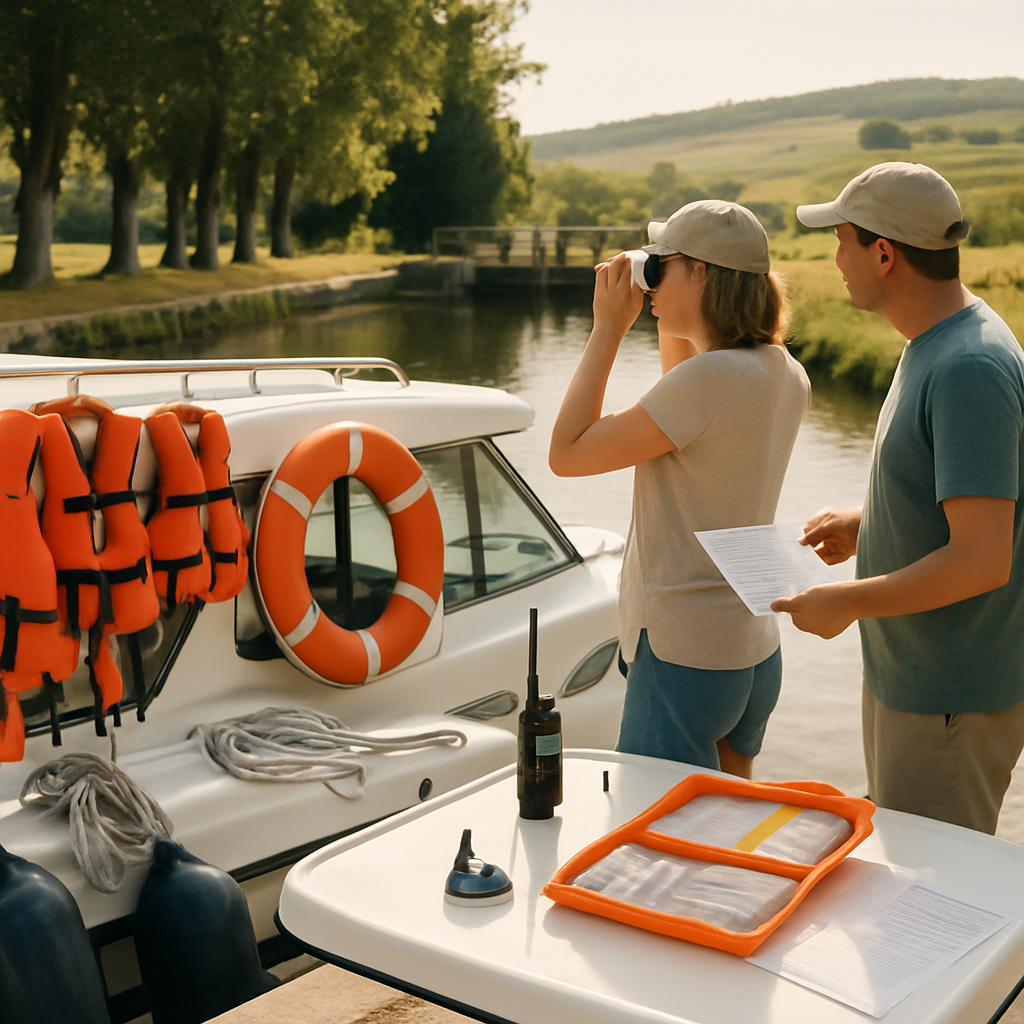
Mix digital tools with classic paper charts. Electronics fail; paper doesn’t. Use GPS and chartplotters to plan your route, but have updated paper charts for the Bourgogne canals and rivers as a backup. Keep a compass and binoculars onboard, and mark lock locations, bridge heights, and mooring spots on a printed route sheet.
- GPS/chartplotter with recent European charts
- Paper charts, route sheets, and a reliable compass
- Binoculars for spotting markers and reading distant lock signs
- Waterproof notebook to log times, fuel checks, and lock instructions
Weather tools and planning
In Bourgogne, the weather can shift — warm mornings can become windy afternoons; fog can roll through low-lying fields. Check forecasts before you leave, monitor local river authority updates, and carry a handheld barometer or a weather app that works offline. When in doubt, delay departure or wait out deteriorating conditions in a safe mooring.
First Aid and Emergency Preparedness: Building an Onboard Medical Kit
A thorough medical kit and the skills to use it change the outcome of many incidents. This section gives you a robust list and practical advice on training and documentation that should be part of every Safety Gear Checklist for Houseboats.
What to include in your medical kit
- Comprehensive first aid kit: sterile dressings, adhesive bandages, gauze, and medical tape.
- Antiseptic wipes, solution and antibiotic ointment for cleaning wounds.
- Burn dressings and cooling gel for scalds or galley burns.
- Trauma shears, tweezers, and a reliable digital thermometer.
- Painkillers (paracetamol/ibuprofen), anti-inflammatories, and antihistamines.
- Anti-nausea medication, antacids, and oral rehydration salts.
- Extra prescription meds with copies of prescriptions and storage instructions.
- CPR face shield and disposable gloves; consider a portable oxygen kit if trained to use it.
- Emergency blanket and splinting materials for fractures or shock.
Training and documentation
At least two people should have up-to-date first aid and CPR training. Practice real-looking scenarios: a deep cut, someone unconscious on deck, or smoke inhalation. Keep emergency medical information for every passenger — allergies, medications, and any chronic conditions. Also, print the coordinates and directions to the nearest hospitals and clinics along your planned route.
Fire Safety, Lighting, and Alarm Systems on Houseboats
Fires can escalate in confined spaces. Prevention, early detection, and correct suppression are the pillars of fire safety onboard. Lighting and alarms help you avoid accidents and react quickly if something happens.
Fire prevention and control
- Place marine-rated fire extinguishers in the galley, engine room, and sleeping areas. Know which extinguisher tackles grease, electrical or fuel fires.
- Shut off fuel lines and electrical appliances before leaving the boat or sleeping.
- Store flammable liquids in approved containers away from heat and living spaces.
- Ventilate properly when running heaters or fuel-burning appliances and maintain their service schedules.
Detectors, alarms and testing
Smoke detectors and carbon monoxide alarms are non-negotiable. Check them before every trip and swap batteries seasonally. Consider alarms that are interlinked so a trigger in one cabin alerts the entire vessel. A monthly test routine will become just another quick task on your departure checklist.
Lighting and emergency illumination
Good lighting prevents trips and helps during emergencies. Keep spare torches, headlamps, and a charged portable floodlight. Low-level pathway lights reduce night-time hazards and are particularly handy when guests are aboard and unfamiliar with the layout.
Seasonal and Regional Gear: What to Pack for Bourgogne Canals and Rivers
Bourgogne changes personality with the seasons — blossom-scented springs, sun-dappled summers, crisp autumns and frosty winters. Your Safety Gear Checklist for Houseboats should adapt accordingly.
Spring and autumn essentials
- Layerable clothing and waterproof shells — mornings are cool, afternoons can warm up.
- Non-slip waterproof footwear for lock operation and damp quays.
- Fog horn and extra navigational vigilance in decreased visibility.
Summer gear
- Sun protection: sunscreen, hats, sunglasses and UV clothing.
- Hydration gear: spare jerrycans or water bottles, and a shaded area to avoid heatstroke.
- Insect protection: mosquito repellent and mesh screens for open windows and doors.
Winter preparations
- Insulated clothing and reliable onboard heating with an adequate fuel reserve.
- Winterization supplies for plumbing to prevent frozen pipes.
- Awareness of ice risks — even light ice can impede navigation or damage hulls.
Regional specifics for Bourgogne
Bourgogne’s canals are idyllic but can be narrow and quiet. Pack long mooring lines and additional fenders for frequent lock maneuvers. Keep a list of local lock opening hours and a small phrase list in French for key interactions — a smile plus a few words goes a long way when asking for help from a lock keeper.
- Extra long lines and large fenders for lock handling
- Lightweight boarding plank or step for uneven banks
- Charts with lock dimensions and bridge heights; know your boat’s beam and air draft
- Local contact list including lock operators, marina offices, and emergency services
Maintenance, Storage and Regular Drills
Safety gear is only useful if it works. Regular maintenance, smart storage, and periodic drills ensure your equipment performs when needed.
- Monthly inspections: test bilge pumps, check extinguisher pressure, examine PFDs and test alarms.
- Seasonal servicing: engine, fuel systems, heating and refrigeration prior to busy cruising seasons.
- Practice safety drills: man-overboard recovery, fire containment, and abandon-ship procedures so the crew reacts smoothly.
- Keep a logbook of checks, replacements and drills for accountability and peace of mind.
Frequently Asked Questions
What safety gear is legally required on houseboats in France?
Regulations can vary depending on the waterway and type of vessel, but generally you must carry basic lifesaving and navigation equipment. Check local rules before departure — consult the France and European Waterway Regulations for specifics. Remember: legal minimums are a baseline; good practice is to carry additional safety items.
Do I need a life jacket for every passenger?
Yes — you should have one properly sized PFD for every person onboard. That includes children and guests who may be shorter or lighter. Make sure vests fit and are stored in accessible locations. If in doubt, encourage wearing them during lock approaches, night passages, or rough weather.
Which fire extinguisher type is best for a houseboat?
Use marine-rated extinguishers and ensure you have types that cover likely onboard fires: A (combustibles), B (flammable liquids), and C (electrical). A multi-class extinguisher (ABC) is common and practical. Place extinguishers near the galley, engine compartment, and sleeping areas and check service dates regularly.
How should I react in a man-overboard situation?
Immediately shout to alert the crew, throw a flotation device toward the person, and mark the spot. Keep them in sight, slow or stop the vessel, and deploy a rescue approach plan that uses the engine and rudder to come around safely. Practice a recovery drill with your crew so everyone knows their role ahead of time.
Is an EPIRB or PLB necessary for inland waterways like Bourgogne?
Not always mandatory, but carrying a PLB or EPIRB is a smart safety margin, especially if you’ll be cruising at night or in more remote stretches. A PLB is compact and personal; an EPIRB is boat-mounted and has longer battery life. If you want maximum peace of mind, take one along.
How often should safety equipment be inspected or serviced?
Do quick checks monthly: PFD condition, extinguisher pressure, bilge pump operation, and alarm batteries. Service items like fire extinguishers and life-raft systems per manufacturer guidance — usually annually or after any use. Keep a log of inspections so nothing slips through the cracks.
What are the essential items for an onboard first aid kit?
Your kit should cover cuts, burns, allergic reactions and motion sickness: sterile dressings, adhesive bandages, antiseptics, burn dressings, painkillers, antihistamines, anti-nausea meds, tweezers, trauma shears, and CPR mask. Also carry extra prescription medications and copies of prescriptions. Tailor the kit to your party — children, elderly passengers, and known medical conditions need special consideration.
How can you prevent carbon monoxide poisoning onboard?
Install CO detectors in sleeping areas and near enclosed spaces with fuel-burning appliances. Ventilate exhaust and fuel-burning units properly and never run generators or heaters in poorly ventilated areas. If your CO alarm sounds, get everyone into fresh air and seek medical help immediately.
What should you know about lock navigation in Bourgogne?
Locks are frequent in Bourgogne and require coordination. Know the lock operation times and local etiquette, keep long lines and fenders ready, and brief your crew on roles before approaching. Being patient and prepared makes lock transits smoother — and more enjoyable.
Are training or certifications required to operate a hire houseboat in France?
For many rental houseboats in France, no formal license is required if the boat’s engine is under a set power threshold; however, training and orientation by the hire company are mandatory. If your boat has a larger engine or you’ll be on more challenging waterways, check local rules. Even when not required, basic navigation and safety training are highly recommended.
How should you store and protect safety gear onboard?
Store PFDs dry and out of sunlight, keep medical supplies in sealed containers away from heat, and place radios and electronics in waterproof storage. Keep an easily accessible primary safety locker and duplicates of critical items in common areas. Label storage locations clearly so in an emergency, everyone knows exactly where to look.
Final Checklist and Practical Tips
Here’s a rapid pre-departure checklist pulled straight from the Safety Gear Checklist for Houseboats. Run through it every time and assign one person to confirm each item — it only takes a few minutes and reduces stress enormously.
- PFDs for everyone onboard — checked and accessible
- VHF radio tested; handheld and mobile phones charged
- Bilge pump(s) functioning — manual backup tested
- Fire extinguishers in place and within service dates
- First aid kit stocked; prescription meds packed
- Navigation lights, spare bulbs and paper charts onboard
- Weather checked and route confirmed; local contacts saved
- Anchor ready and lines stowed; fenders on board for locks
- Drill roles assigned — who handles the radio, who stays with the injured, who manages lines
Practical tip: take five minutes to brief any guests when they board. Point out the life jackets, show the location of the extinguisher and explain the basic rules for moving on deck. Assign simple roles to willing guests like holding the torch or watching the map during lock approaches — involvement reduces panic and keeps everyone focused.
Wrap-up: this Safety Gear Checklist for Houseboats is designed for real people with varied skill levels. It’s practical, adaptable, and aimed at keeping your Bourgogne trip memorable for the right reasons. Prepare, train, and keep a calm head — your gear does the heavy lifting; you just need to use it smartly. Bon voyage and safe cruising!